


We’ve got ‘winning’ all wrong.
For many of us, work is a means to an end, and we can make our peace with that. When your life has variety, community, friends, and art, your job might just grease the wheels, and that’s OK.
If it’s not OK, that friction might have nothing to do with your job (though it might feel like it). Instead, it might indicate that you lack variety, movement and meaning elsewhere.
During the pandemic, my wife and I experienced the collapse of variety, and in the giant marquee of life, our jobs became the only tent-pole.
Imagine it. A sweeping canvas and all its massive weight pulling down on a single point of focus.
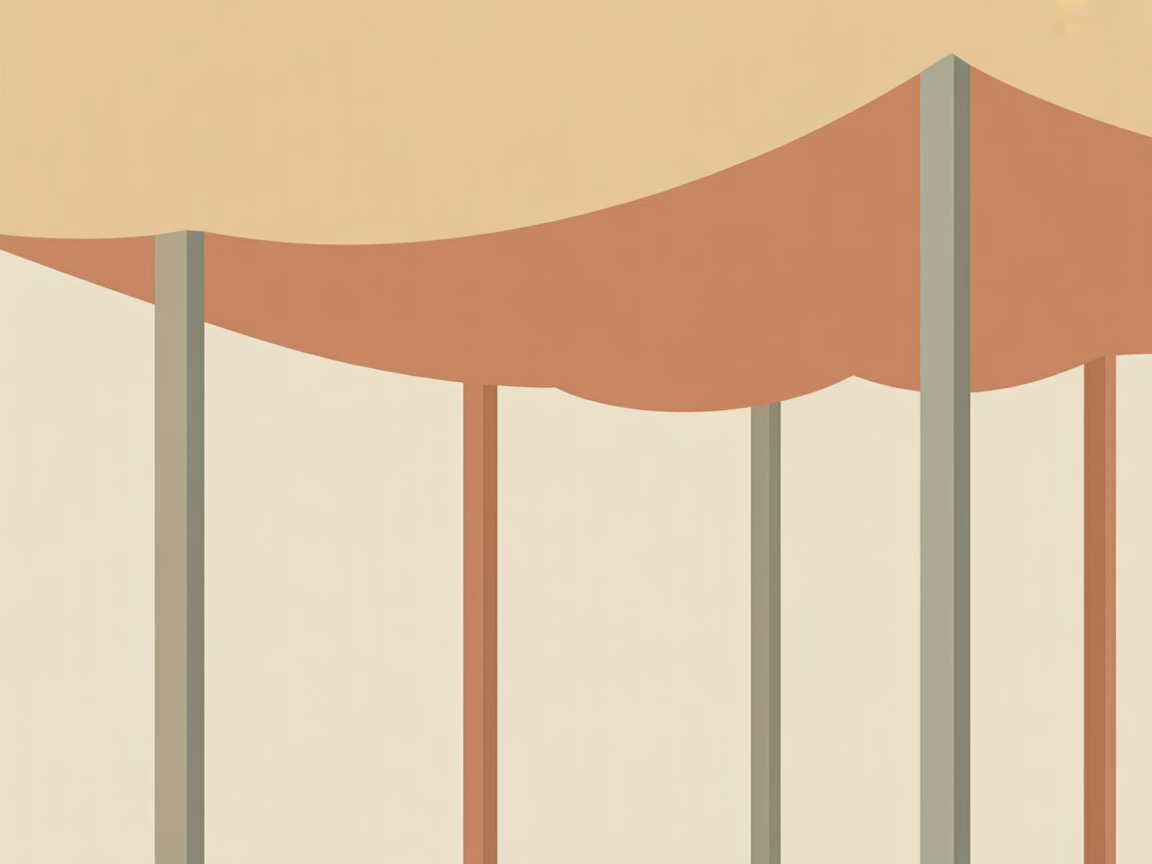
Without meaning to, we expected too much value from work - value it was never designed to give, could never give. For a time, work felt like an anchor holding the ship down against a rising tide.
But work wasn’t really the anchor, it was just an unwilling victim of the drama playing out elsewhere. A vessel through which our angst could flow.
Now, we’ve moved, our son has been born, we’re meeting new parents, we’ve made new friends at the gym, and I’ve started going back to Church. In short, we’ve raised new tent‑poles that support the grand canopy of life.
Its weight distributed, creating shelter. In its shadow, room to move and breathe. Space for new connections and friendships to form.
And with it, the work lifts too.
Our work exists in service of life - it’s no longer the centre of it.
It’s one of those, ‘yeah, obviously’ ideas. And yet, time and time again I see friends and loved ones try to solve a dissatisfaction with life by changing their work, when the reverse is often required.
Changing what you do might change how you feel. But most of the time we just take our insecurities, frustrations, blind spots, and triggers with us. After the honeymoon period fades, we remain who we always were.
Incomplete, with bigger questions to answer.
The Transaction Truth
For most people, when fairly held, work is a transaction. We exchange time, energy, and brain power for money. That’s it.
And that’s OK.
When the exchange is fair, work promises a great many things, security and stability among them; maternity cover, affording things with ease, weekends that belong to you, etc.
It’s not work’s job to give you purpose, validate your worth, or ease the strain where you’re not raising new tent-poles to support life more broadly.
Where work facilitates warm connections and occasional direction, good - but here’s the hard truth: your life experience is not your employer’s core function. But in the exchange, you do get to put your job down at day’s end. Your weekends are yours to enjoy, or whinge through.
The trouble starts when we expect work to be more than this transaction. When we demand it give us identity, meaning, community, and creative expression all at once.
That’s not a job anymore. That’s a religion.
And most jobs make terrible gods.

Why Starting a Business Won’t Save You
After five redundancies in a decade, I understand the impulse to escape. To start your own business powered by “earn what I deserve” or “achieve financial freedom.”
But these objectives create an impossible paradox.
When will you have achieved your worth? When you hit six figures? Seven? Will you ever feel financially free, or will your expectations expand to match your new wealth?
And there’s a new world of frustration waiting for those who do take the plunge.
Here’s what nobody tells you: being good at what you’ve been trained to do doesn’t mean you have the adjacent skills to make a business work. You’ll need to sink hundreds, maybe thousands, of uncertain hours into earning almost nothing whilst learning those skills.
New businesses fail within two years. Not because of the official reasons we hear about, but because that skills gap, and the distance between expectation and reality, amplifies every negative feeling about worth you carried into the launch.
If you believe it’s going to be a battle, you’ll approach the work with a warrior’s mindset. If you believe opportunity is scarce, you’ll become cheap. For many entrepreneurship doesn’t set them free, it amplifies their flaws.
Hustle culture is the exemplification of this, a pervasive myth whose conditioning I struggle to break every day. I do my best to remember this piece of Unremarkable thinking: entrepreneurship isn’t designed to make me rich, it’s designed to set me free - financially, spiritually, and creatively.
For most, the friction feels too much. The way too unclear.
Disconnected from colleagues (who may have been your only friends), working in your leisure space, hours longer and earning less, security? What security.
So people give up.
Not because they lacked hustle. Because they started for the wrong reasons. Without respecting the cost. Without understanding themselves.

The Freedom Paradox
The Rolling Stones said it best: you don’t always get what you want, but sometimes, you get what you need.
Think about smiles for a second.
A smile is only a smile because you don’t smile all the time. If you did, that would be creepy, and it would be meaningless - it would just be your face. Wealth without limits is just a new normal. Restaurant Gordon Ramsey might as well be McDonald’s if it doesn’t cost you anything.
Financial freedom is painfully over-rated (hell, it might not even be real) and not recommended for the majority of people who understand that value isn’t a number - it’s a decision born from the tension that not everything is possible. Maybe we should keep it that way.
If you start by pursuing external validation or unattainable metrics about financial freedom, you might get what you’ve chosen - but you won’t get what you want. Peace. Joy. Contentment. Space to enjoy your life.
If you slave yourself to objectives that can never be satisfied, all your actions will have your insecurity, not your power, baked into their DNA.
No truly satisfying business was ever built on such foundations.
Yes, there are wealthy, powerful people who’ve achieved it. But are they happy? Would you want their life?
Do you want to downgrade your Michelin-starred meal to just… food?
Of course not.
The Unremarkable Path
So what actually works? Whether you stay in your job or start a business, the answer is the same.
Stop asking work to hold up the entire canopy.
Before you change jobs, before you launch a business, before you chase financial freedom - raise the other tent-poles first.
If you do want to start a business, interrogate your motivations. Do you want to start a business to solve a problem or to express who you are and serve?
The difference is crucial: in one world you’ve just chosen a new master to work for, in the other you’re working towards your most realised self.
Here’s what I’ve learned through five redundancies and building my own business: the problem was never the work itself. The problem was that work had become the structure I was relying on to hold up the canopy of everything else.
When I finally raised new poles - moved house, became a father, joined a gym, returned to church - my business didn’t just survive. It breathed. Not because I worked harder, but because work stopped carrying weight it was never designed to bear.
And I’m not saying that when my business ‘breathed’ money started pouring in. Not at all. I’m saying that those kind of outcomes became proportionally important.
This is why constraints matter more than ambition. Why practice matters more than outcomes. Why the bottlenecks of your business might have nothing to do with work - they might be resolved by raising other tent-poles in your life that create the stability and space that lets your work find its own rhythm.
And when you do, you might find that work abdicates its throne at the centre of your world and instead becomes a great partner in service of your life.
And for most, that’s the win they’ve been looking for all along.
Activity: Your Tent-Pole Audit
Let’s explore where you might need to raise or reinforce tent-poles to support your grand canopy.
Take five minutes right now. Draw five columns on a piece of paper and label them:
Work - Your job, business, or career. Rate honestly: how much weight is this pole currently carrying?
Purpose - Your long-term sense of direction and contribution. The work that matters beyond the paycheque.
Value - Your grounded sense of self-worth. The relationships and communities where you’re seen and valued for who you are, not what you produce.
Wonder - The interests and experiences that bring you joy. The things you do simply because they delight you.
Relationships - The meaningful connections you actively invest in. The people who know you beyond your job title.
Now rate each column honestly: Is this tent-pole standing firm (5), leaning (3), or collapsed (1)?
If work is your only 5, you’ve found your problem. And the solution isn’t to make work do more - it’s to raise the other poles.
Which one needs attention first? Don’t demand it from work. Design for it elsewhere.
For whichever pole needs attention most, write down two or three specific actions you could take this month. Not someday. This month.
Maybe that’s rejoining the gym you’ve been putting off. Texting three friends to schedule that coffee. Signing up for the pottery class you keep thinking about. The specifics matter less than the commitment - pick one action and put it in your calendar before you close this page.
Because here’s what I’ve learned: when the other tent-poles stand firm, work becomes what it was always meant to be - one support among many, not the whole structure.

The Gardener’s Choice
There was once a gardener who inherited a large plot of land. Overwhelmed by the possibilities, she tried to cultivate every corner at once - vegetables here, flowers there, herbs along the fence, fruit trees in the back.
Within months, she was exhausted. The garden became a burden.
Nothing thrived because nothing received enough attention. She spent her days racing from one failing bed to another, wondering why her neighbours’ smaller gardens flourished whilst hers withered.
One autumn, she made a decision. She would close three of the four gates and focus on a single quarter. She chose constraints.
That winter, she worked that small plot deeply. She learned its soil, its light, its rhythms.
Come spring, something unexpected happened - the concentrated effort created abundance. The vegetables grew strong. The soil improved. And in that focused quarter, the garden finally breathed.
By choosing what she wouldn’t tend, she discovered what could truly flourish.
Your life is that garden.
Work is one quarter, not the whole plot. And the constraint of choosing which gates to close - which demands to decline, which parts of life to nurture and grow - is what creates the space for anything good to grow.
The challenge:
This week, name one thing you’ll stop demanding from work and one tent-pole you’ll raise instead.
Write them down. Make them specific. Then serve that work, not the outcome.
That’s the practice. That’s how constraints create freedom.